The number in science and culture
The bismuth that seemed stable
2003 · bismuth-209
In 2003 researchers published the first direct observation of alpha decay in bismuth-209. The process happens so slowly that the isotope had long been regarded as stable.
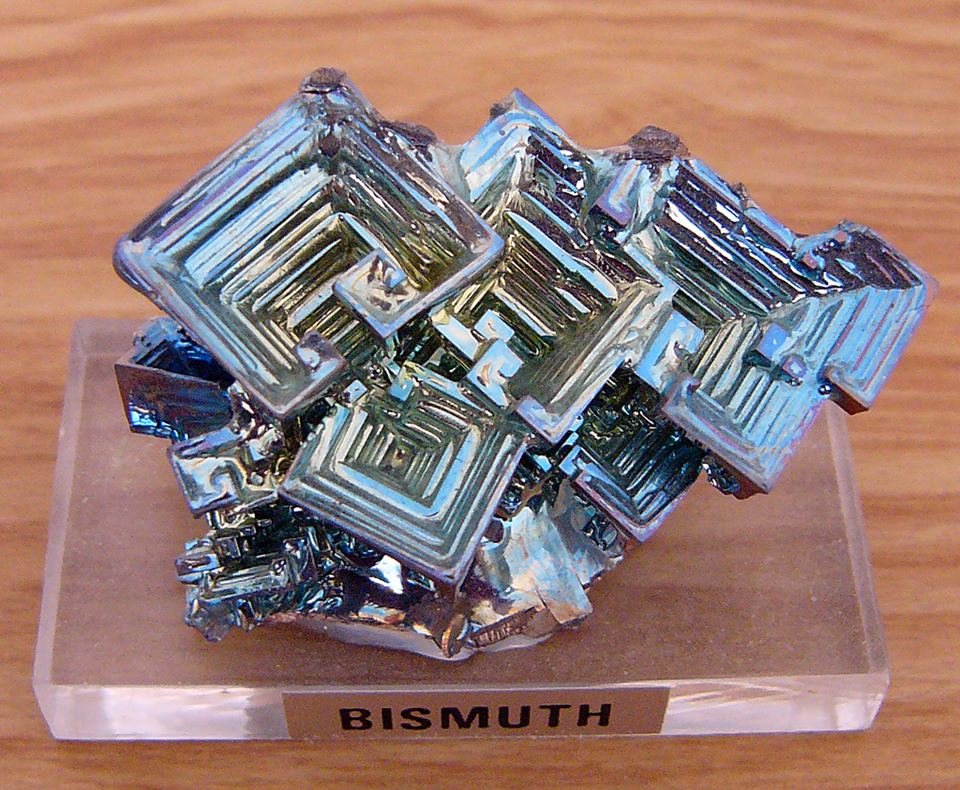
To pick up so rare a signal, the physicists chose a crystal of bismuth germanate. The substance under observation was part of the detector itself. Working at twenty thousandths of a degree above absolute zero, they could distinguish the energy released by the occasional decay.
The team calculated a half-life of nineteen billion billion years. Written out in full, that estimate is a 19 followed by eighteen zeros. A half-life describes a population of nuclei. Half are expected to decay over that interval, although an individual nucleus can decay at any time.
- Isotope
- Bismuth-209
- Crystal
- Bismuth germanate
- Reported half-life
- 1.9 × 10¹⁹ years